
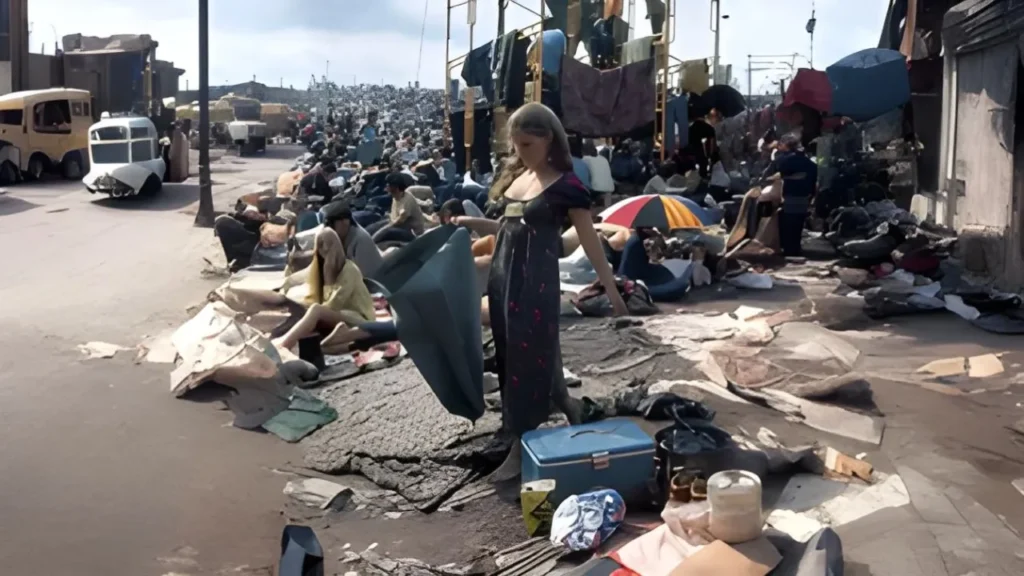
Woodstock was not a festival. By the time the first act took the stage on August 15, 1969, it had already become something else — a temporary city on a dairy farm in Bethel, New York, built without permission from nearly half a million people who arrived because they had nowhere else to be.
The organizers had expected 50,000. They sold roughly 186,000 advance tickets at $18 each, with walk-up admission set at $24. The fences came down before the music started. After that, there was no practical way to count anyone. Bethel Woods now estimates that nearly 500,000 people were there over the four-day event.
I was 16 that summer, working a job 50 miles away. I wasn’t some die-hard hippie or a political activist. But a girl I knew walked into a bar one night and said, “I’m going to go find my friends.” I just said, “Yeah, I’m in.”
We left around 9 in the evening, took back roads, and stopped moving maybe eight miles out. The traffic had turned the entire countryside into a parking lot. So we walked the rest of the way in the dark, and we were not alone. It was this weird, silent parade—people just pouring out of fields and side roads, all drifting toward the same low, bass-heavy pulse echoing through the hills. By midnight, you could feel the sound before you could hear the songs.
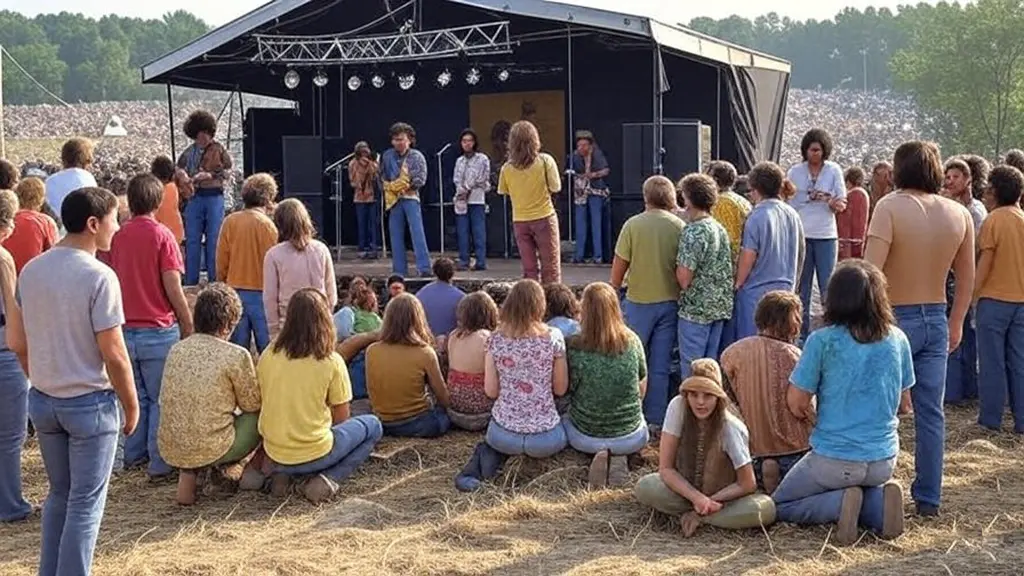
Reaching the top of the hill and looking down into the bowl? I still see that image when I close my eyes. Half a million people, though the number is meaningless until you see it—this massive, swaying ocean of human beings moving like grass in the wind.
Inside that crowd, the rules didn’t exist. Mescaline and LSD were being sold like candy. Pot smoke was just part of the atmosphere. We somehow found our friends in the dark—a needle in a haystack of 400,000 people. I have no clue how, and I still don’t have a rational explanation for it.
At dawn we drifted toward the camping areas. The Hog Farm commune had set up free kitchens and ran them through the weekend — brown rice, vegetables, whatever could be sourced or helicoptered in after the food concessions failed by Friday evening. People were living in little neighborhoods marked by hand-painted signs, and there were naked people walking around, just completely unbothered by anything, like clothes had never been invented.
Then Saturday, the rain hit. It turned the hill into a Slip ‘N Slide of mud. It was thick, nasty, boot-sucking mud. And the weird thing? I don’t remember being miserable. I don’t remember being hungry, even though I have no idea when I last ate. At 16, you’re just fueled by the sheer adrenaline of being part of something that big.
Sly and the Family Stone played at 3:30 Sunday morning and made the wait irrelevant. That set — ‘I Want to Take You Higher’ at that hour, to that crowd — remains the clearest musical memory I have from those three days. Everything that happened before that just felt like the warmup.
Sunday afternoon we left. Covered in mud, carrying less stuff than we brought, but we walked away with something else that took years to name.
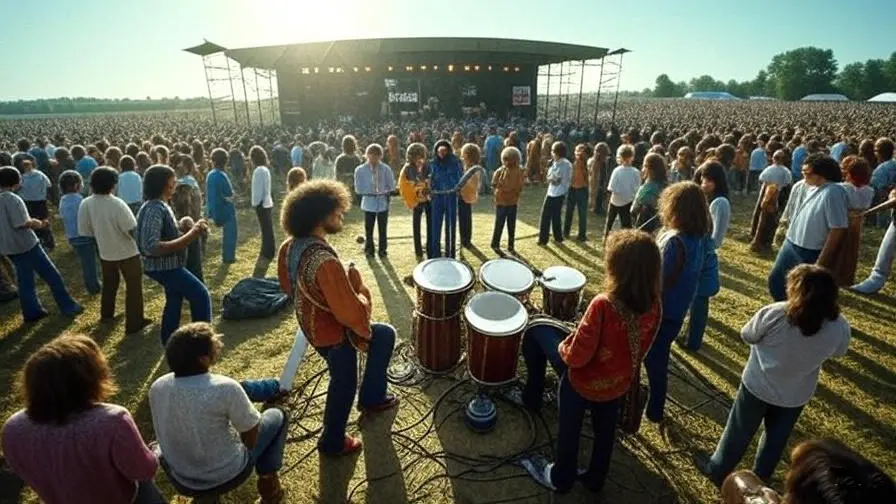
Woodstock ran 32 acts across four days — Jimi Hendrix closed it out Monday morning to a crowd reduced to roughly 30,000, the rest having drifted home. No major violence was reported across the entire weekend. Three people died: one from a heroin overdose, one from a ruptured appendix, one crushed by a tractor while sleeping in a field. Two births were recorded on the grounds.
People love to pit Woodstock against Altamont four months later, like they’re the two warring sides of the 60s. They call Woodstock the myth and Altamont the reality check. The real story isn’t the music or the drugs; it’s that Woodstock was a total, logistical disaster that worked. Not because of the organizers, but because 500,000 strangers just collectively decided to make it work.
The mark it leaves is not soft. It is the specific knowledge, carried ever since, that half a million people can share three days of mud and music and walk away having hurt no one.
All comments are subject to our Community Guidelines. Opinions belong to readers.