
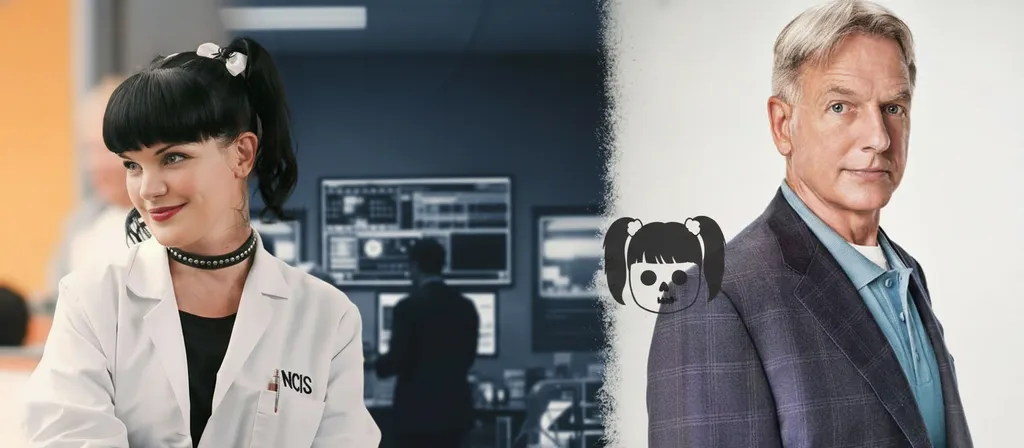
The most telling thing about Abby Sciuto isn’t that she kept a coffin in her lab, named her mass spectrometer, or wore platform boots to active crime scenes. It’s that she was still doing all of it 15 years later.
On NCIS, Abby never “outgrew” her identity.
Pauley Perrette joined the series in 2003 with a background in sociology and criminal justice, and Abby never played like a scientist written by someone who had never stepped foot in a lab. She had opinions on the evidence, she argued with results, and she took every dead-end lead personally.
The pigtails, chokers, and band tees weren’t just a lazy shorthand to tell viewers she was “quirky.” They were Abby’s clothes. She wore them without apology for 15 seasons, as if the idea of changing to fit the room had simply never interested her.
That is rarer on television than it sounds.
Most long-running shows follow a predictable pattern with “alternative” characters. They start with the goth, the punk, or the resident weirdo, and then slowly make them more digestible for a mainstream audience. The wardrobe softens, the edges get rounded off, and the character is only allowed to stay “different” once that difference has been rendered completely harmless.
NCIS refused to do that with Abby.
Her relationship with Gibbs (Mark Harmon) carried a lot of the show’s emotional weight because it was never overworked. Abby could hug him without asking; she lit up the second he stepped into her lab. The Caf-Pow was not just a prop or a joke after a while. It became one of those small rituals long-running shows either earn or fake.
With Abby and Gibbs, the show had earned it.
Perrette left NCIS after Season 15, her exit in “Two Steps Back.” drew one of the show’s biggest audiences of the season. It made sense; by then, Abby was not just a side character. She was part of the show’s wiring.
The writers did not kill her off, or bring in a cleaner version of the same character and ask viewers to move on. Abby left after Clayton Reeves’ death, choosing to help carry forward the charity he wanted to build.
It was an exit built around loyalty, grief, and action. Not a long speech. Not a sentimental reset. Abby did what Abby would do: she turned the loss into something useful and left before the room could make it smaller.
That was the right ending for her.
On a show that spans decades, it’s easy for characters to drift. Writers get bored, networks push for broader appeal. A new audience comes in. The old shape starts looking too specific, so the character gets sanded down until almost anyone could recognize them.
But Abby never became “just anyone.”
She arrived in 2003 as a very specific person and stayed that way through 344 episodes. Same boots, same lab, and the same fierce attachment to the people she loved. She refused to become ordinary just because ordinary is easier to write.
The coffin stayed. The Caf-Pow stayed. The pigtails stayed.
So did Abby.


All comments are subject to our Community Guidelines. Opinions belong to readers.
wish you all the best