
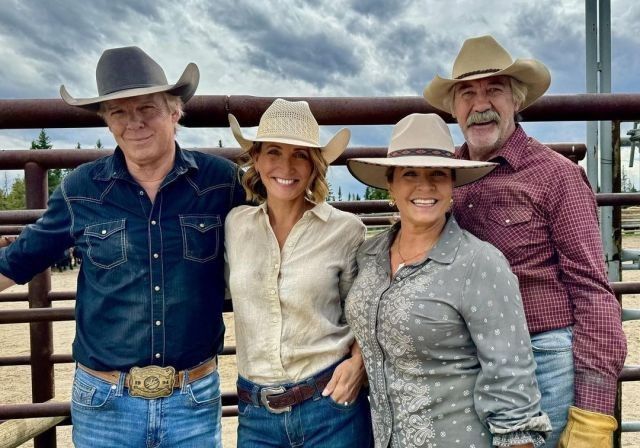
The writers of CBC’s hit drama Heartland share the secrets to writing a story where three (and sometimes four) generations live under one roof.
For over 13 seasons, fans have felt right at home with the Fleming family. Long before “multigenerational living” became a popular phrase, Heartland was already showing us what it looks like when grandparents, parents, and kids share the same space.
In real life, this way of living has boomed. Over 2.2 million Canadians live in homes with multiple generations. While sharing a house can definitely cause some drama, the perks are huge—especially for kids, who get extra love, attention, and wisdom from their grandparents.
The Fleming family makes this lifestyle look warm, real, and inviting. We sat down with Heartland writers Heather Conkie, Mark Haroun, and Ken Craw to talk about how they bring these family dynamics to life.
Where do you get your inspiration?
Heather Conkie: We get a ton of ideas from our amazing cast. Over 13 seasons, we’ve watched these characters literally grow up. Amy started as a 15-year-old girl, and now she’s a married mom. Keeping their growth honest and grounded helps us connect with viewers of all ages—from toddlers to grandparents.
Mark Haroun: A lot of it comes from asking, “What if?” What if Amy has to move her young family back into the main ranch house with her sister, niece, and grandpa? What happens when Amy’s dad moves in with his ex-father-in-law, who he doesn’t really get along with?
Ken Craw: We borrow a lot from our own lives. The best part about writing a family show is that your everyday life is research. We all have families, and we all deal with the ups and downs that come with them.
How much do your real-life families influence the show?
Heather: Whenever we plan a new season, we end up sharing tons of personal stories—funny, sad, or totally normal. A lot of those end up in the scripts. My own family actually worries about what they say around me because they’re scared I’ll put it on TV!
Mark: Family dynamics are everything. When we brainstorm, we think about which characters would create the most interesting spark if we put them in a room together.
Ken: We always ask how a situation looks through each character’s eyes. A teenager, a parent, and a grandfather are all going to view the exact same problem completely differently.
What’s the hardest part about writing for so many different age groups?
Heather: It’s harder than it looks. You want every character to connect to the main theme of an episode, but because of their different ages, they all react differently based on their own life experiences. They don’t always agree, and that’s where the drama comes from.
Mark: The challenge, especially after 13 seasons, is keeping things fresh. You can’t rely on the same old tricks. You have to keep digging into who these characters are when life throws them a curveball.
Ken: You have to put yourself in everyone’s shoes. Our job is to create stories that challenge what each character believes and watch how they grow.
How do you capture the chaos of everyone living under one roof?
Heather: Season 13 really dives into this. Amy and Ty are cramped in the loft with their foster son, Luke. Tim tells them to move into the main house so he can take the loft, but Georgie wants the loft too after coming back from Europe. It’s less about doing book research and more about knowing our characters’ quirks and seeing how they handle tight quarters.
Mark: We research specific plotlines, but when it comes to characters clashing under one roof, it all comes down to how they’ve grown over the years.
Ken: I’ve never lived in a multigenerational home myself, so I just imagine taking normal family tension and turning up the volume. When everyone lives together, you can’t run away from your problems—you have to work them out to keep the house running.
Do you think living together changes a family’s values?
Heather: Viewers often tell us that watching Heartland brings their own extended families together on Sunday nights. They love seeing the family dinners where everyone sits around the big table to talk, argue, and laugh. Knowing the show brings real families closer makes me very happy.
Mark: It gives older and younger generations a chance to really know each other. Older generations have so much wisdom to share. It shows that grandparents are vital and important to a family, not just sidelined.
Ken: It gives kids amazing role models right at home. In today’s busy world, parents work long hours, and kids often look to social media for guidance. Having grandparents around gives kids more guidance and gives older family members a wonderful sense of purpose.



All comments are subject to our Community Guidelines. Opinions belong to readers.
Heartland has been a blessing for the families of the world Pawt
Heartland series has been a blessing, I just wish I could get seasons 17, 18 and 19. I love watching this show, I’ve always liked horses and it shows how a real family reacts to things with no sugar coating