
Ziva David did not give Tony DiNozzo the line fans had waited years to hear. She did not say “I love you.” She did not promise him anything. She looked at him in that olive grove and gave him something harder to carry.
“You are so loved.”
That was the line that stayed.
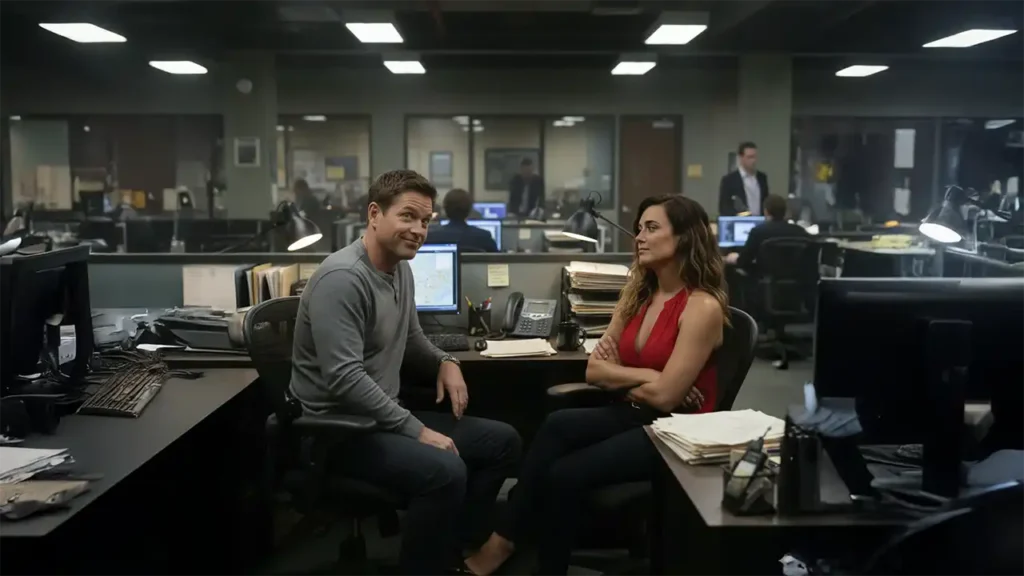
Tony and Ziva were never built like a normal TV couple. NCIS did not start them with a grand romantic moment. It started with a look across a bullpen still carrying the shock of Kate’s death, a few sharp jokes, and two people trying to decide whether they could trust each other.
Ziva arrived as Mossad’s liaison. Tony watched her the way he watched anyone he could not immediately read — with jokes, suspicion, and a little too much interest. Their banter came fast, but the pull was underneath it. Tony could flirt with almost anyone. Ziva could cut through almost anyone. Together, they had something harder to define.

“Under Covers” made that clear early by putting them undercover as a married couple. The setup could have been cheap. Instead, it gave fans the first real clue that this was not just another workplace flirtation. Tony and Ziva played the roles too easily, still hiding behind work and sarcasm while making the whole thing look a little too natural.
The show kept building them through instinct.
When Ziva was blamed for something she did not do, Tony did not need a long explanation to believe her. When Tony came back from the Jenny Shepard undercover assignment carrying more damage than he wanted to admit, Ziva noticed. They kept circling each other for years, close enough to understand the other person and guarded enough to pretend that did not mean anything.
Tony hid behind movie references and jokes. Ziva hid behind bluntness and control. Neither of them was built for easy emotional honesty, so NCIS let the relationship live in the spaces around the words: a look, a pause, a jealous reaction neither one wanted to explain, a refusal to leave when things turned dangerous.
By the time “Truth or Consequences” came around, the relationship had already been through real damage. The Michael Rivkin fallout had broken something between them. Tony and Ziva had said things that could not be easily taken back. Trust had been bruised. Pride had done what pride usually does.
Then Tony found her.
He had spent months believing Ziva might be dead. He had gone into danger to reach her. So when he says he cannot live without her, it does not land like a romantic line written for fans. It sounds like Tony finally running out of ways to avoid the truth. He is not trying to charm her. He is saying the thing he can no longer keep buried.
NCIS kept giving fans those almost-moments after that.
Paris became part of the legend because the show refused to explain too much. One hotel room. One couch. Two different versions of what happened. Tony and Ziva could deny whatever they wanted, but the rhythm between them kept giving them away.
The elevator bomb scare did the same. So did the smaller moments after “Shiva.” The concern, the domestic details, the way they became each other’s first instinct without the show needing to label it every few episodes.
The dance in “Berlin” may be the clearest version of that. Their hands find each other, and for once both of them seem to stop defending themselves. The scene gets close to resolution, then pulls back. Life gets in the way again.

That frustration became part of the story. With Tony and Ziva, the feeling was rarely the problem. The timing was.
Then came “Past, Present, and Future.”
Ziva’s farewell could have been written as a big romantic finish. NCIS chose something more painful. Tony goes to find her, ready to fight for something he still does not quite know how to say. Ziva has already made a different choice. She needs to step away from the work, from the danger, from the version of herself that has been shaped by survival for too long.
So when she tells Tony, “You are so loved,” it lands harder than a simple confession would have.
It is not a promise.
It is not a clean goodbye.
It is not the answer fans wanted.
It is Ziva telling Tony that what he means to her is real, even if she cannot stay and build a life around it yet.
“I love you” would have given the scene a cleaner shape. “You are so loved” leaves the ache in place. It lets Ziva be honest without pretending she has solved herself. It gives Tony something he probably needed more than he knew: proof that he mattered beyond the jokes, beyond the job, beyond the version of himself he performed for everyone else.

Tony’s reaction carries the rest. For once, he does not hide behind a movie quote. He does not turn it into a joke. He just has to absorb it.
The aftermath changes him.
Ziva is later presumed dead. Tony learns he has a daughter, Tali. His response says more about his growth than any speech could. He does not stay at NCIS and keep playing the same role. He leaves. He moves his life around his child. The bravado does not vanish, but it finally falls into its proper place.
That is the mark Ziva leaves on him.
Not just romance. Responsibility.
Years later, Ziva’s return had to carry everything that happened after the olive grove. She had been gone too long. She had lived in survival mode. Tony had built a life around Tali. There was no way to bring them back together without all that history sitting in the room with them.
That is why fans still return to the olive grove scene. Not just because Tony and Ziva were popular, and not just because viewers wanted them together. The line captured what their whole story had been about: two people choosing each other in small ways before they were ready to say what those choices meant.
A look in the bullpen.
A hotel room in Paris.
A dance in Berlin.
A goodbye in an olive grove.

By the time Ziva said “You are so loved,” fans already knew exactly what she meant.
They had been watching it happen for years.




All comments are subject to our Community Guidelines. Opinions belong to readers.
Resumo de uma linda história de amor maduro, resiliente, resistente, verdadeiro!! Amei esse post !!