

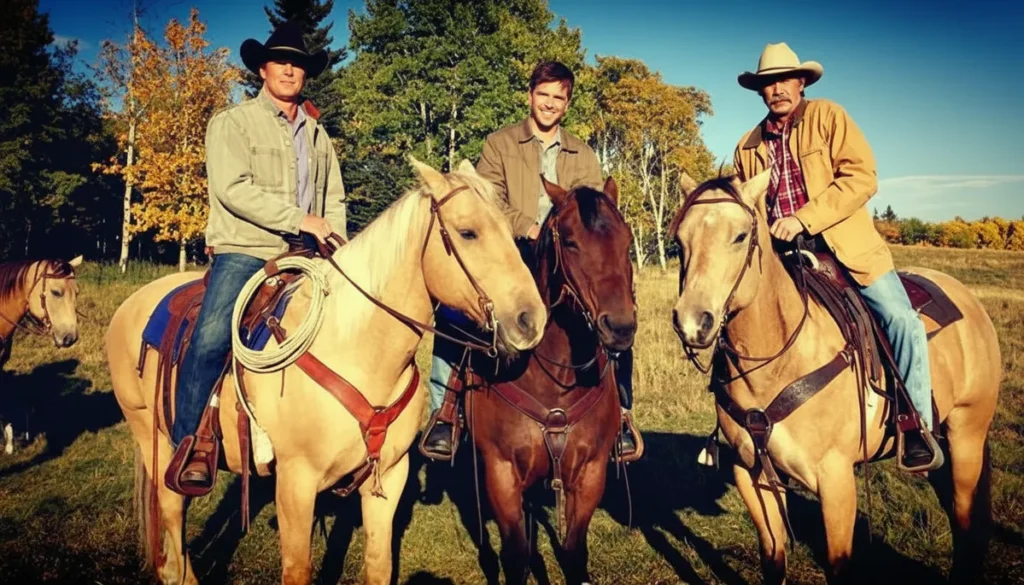
When Heartland first graced our screens in 2007, it arrived with a quiet confidence, almost intentionally understated. Adapted from Lauren Brooke’s beloved YA novels, it invited us into the world of Amy Fleming, a teenager with an almost mystical ability to soothe troubled horses, and a family grappling with the raw edges of loss. The cast wasn’t a parade of household names, and the storylines weren’t designed for dramatic fireworks. Instead, it whispered, trusting its audience to lean in and listen.
And then, something remarkable happened: it simply endured.
Year after year, the show continued to find its audience, gathering momentum like a gentle, unstoppable tide. Families settled down together, parents found themselves lingering long after the kids had drifted off, and a generation grew up alongside the Flemings. By 2015, it had quietly surpassed Street Legal to claim the title of Canada’s longest-running drama. Now, nearly two decades later, it stands tall, a testament to its unique charm.
Its secret? Not a grand reinvention, but a steadfast refusal to change its core.
A Show Comfortable in Its Own Skin
Heartland has never chased fleeting trends or sensationalism. You won’t find cartoonishly evil villains or plot twists engineered to break the internet. Its enduring appeal lies in its unwavering focus on ordinary people navigating life’s complexities, striving to do their best, and often, beautifully, falling short.
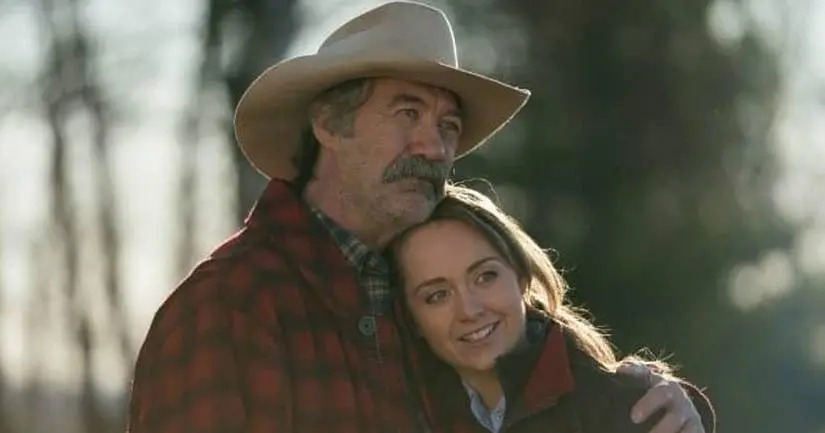
Amy, brought to life by Amber Marshall, isn’t a flashy miracle worker. Yes, she possesses an extraordinary connection with horses, but she’s also depicted as a real person: weary, stubborn, burdened by grief, and sometimes, profoundly unsure. Jack (Shaun Johnston) is the quintessential gruff patriarch, old-school to his core, and refreshingly, not always right. Lou (Michelle Morgan) yearns for order and progress, constantly learning that life rarely adheres to her meticulously laid plans. And Tim (Chris Potter)? He arrives messy, flawed, yet perpetually trying to make amends.
The show doesn’t preach its morals; it simply allows its characters to live with the consequences of their choices, letting their journeys speak for themselves.
The Unvarnished Truth of Rural Life
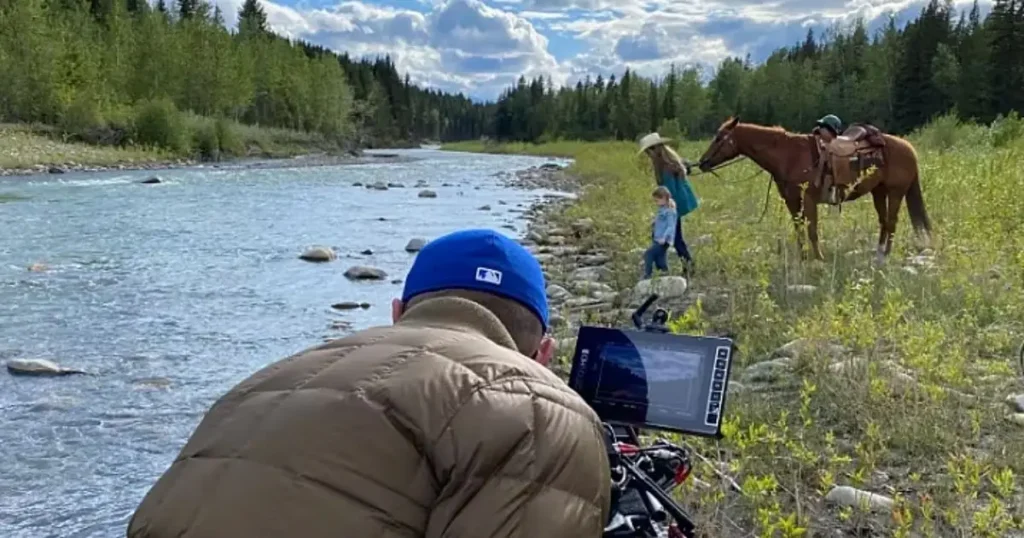
There’s an unpolished authenticity to Heartland that feels deeply refreshing. The barn isn’t a pristine set piece; it’s genuinely dusty. The farmhouse feels truly lived-in, a place where generations have shared meals, sometimes awkwardly, always with a sense of belonging. Horses aren’t mere background props; they are the heart of the ranch, demanding hard work, constant responsibility, and endless worry.
Filmed against the breathtaking backdrop of Alberta, from the quaint town of High River to the majestic foothills near Calgary, the landscape isn’t airbrushed into an unrecognizable fantasy. For those who know this part of the world, it feels profoundly familiar. For those who don’t, it rings true enough to be utterly believable.
The Cast: No Pretense, Just Presence
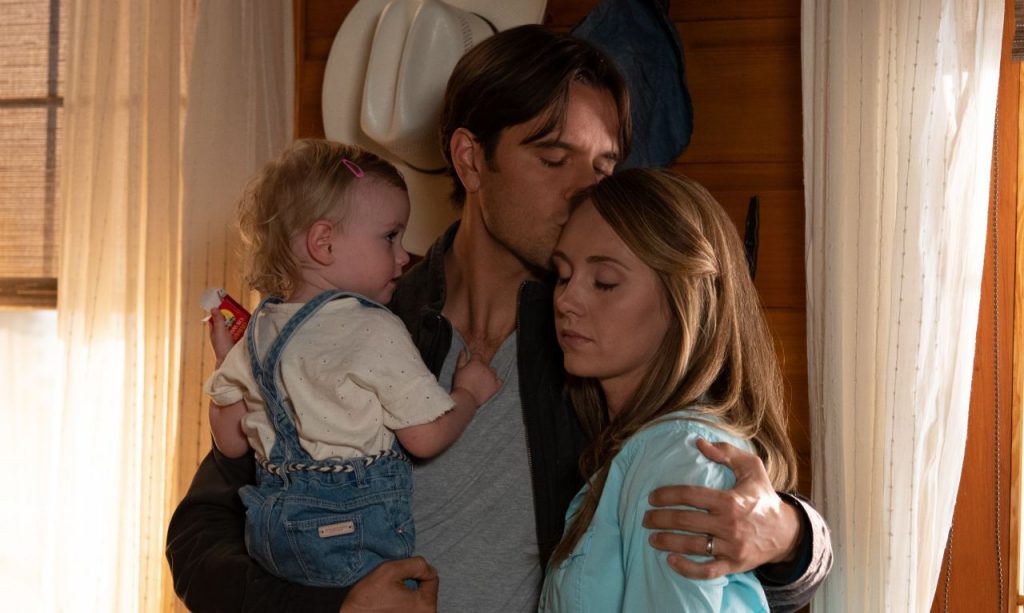
Much of this genuine feel emanates directly from the people who inhabit these roles. Amber Marshall, for instance, doesn’t just play a rancher; she is a rancher, living a life deeply intertwined with horses and the land she calls home.
You can tell. The way they sit a horse. The way they move around the barn. Even when stunt riders step in, it’s because safety demands it—not because the cast can’t handle the work. There’s a trust there, between actors, animals, and crew, that shows up on screen.
It Lets the Hard Stuff Breathe
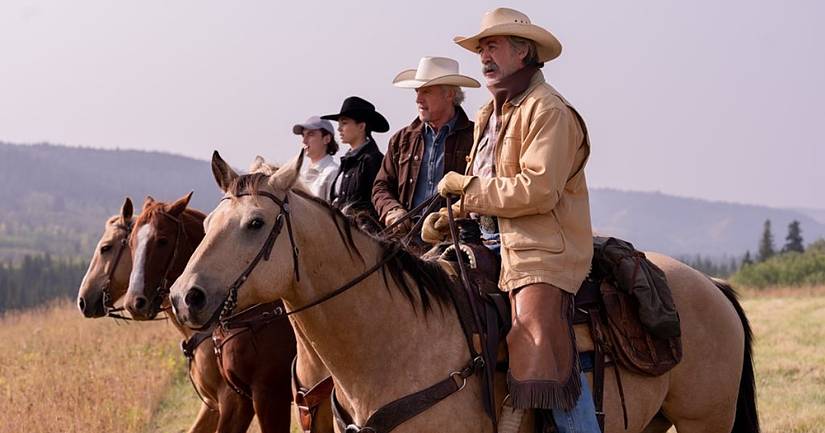
Heartland never dodges heavy themes—death, addiction, trauma, burnout—but it refuses to rush them.
When Ty died, the show didn’t wrap grief up in a neat arc. It lingered in silence. In unfinished conversations. In people not knowing what to say.
That restraint is rare. The emotion comes from watching characters keep going, not from speeches telling you how to feel.
And Yes—The Horse Work Still Delivers
Rodeos, cattle drives, winter rides, training sessions—the horse work has always been central. Not as spectacle, but as story. Amy’s “Miracle Girl” reputation was never about magic tricks. It was about patience, empathy, and listening.
That connection is the show’s spine.
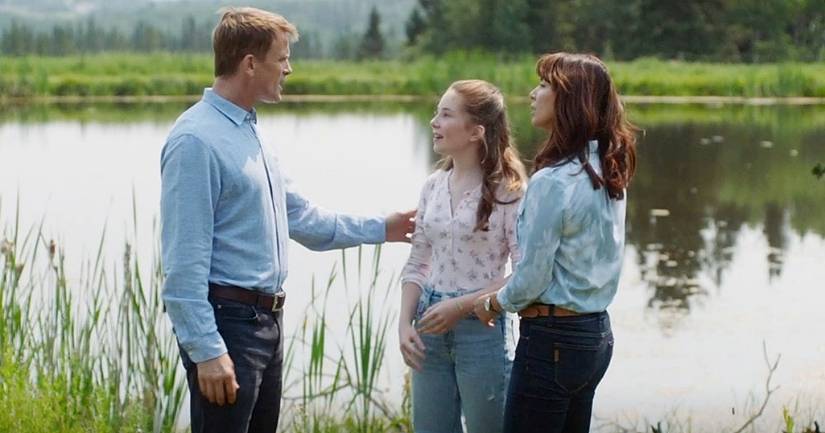
Heartland didn’t survive by reinventing itself. It survived by aging the way real life does—slowly, unevenly, honestly. Characters grow older. Kids grow up. Basically, the land stays steady.
Truth is, in a TV landscape obsessed with noise and reinvention, Heartland did something radical: it stayed literally put. And somehow, that’s what made it last.