

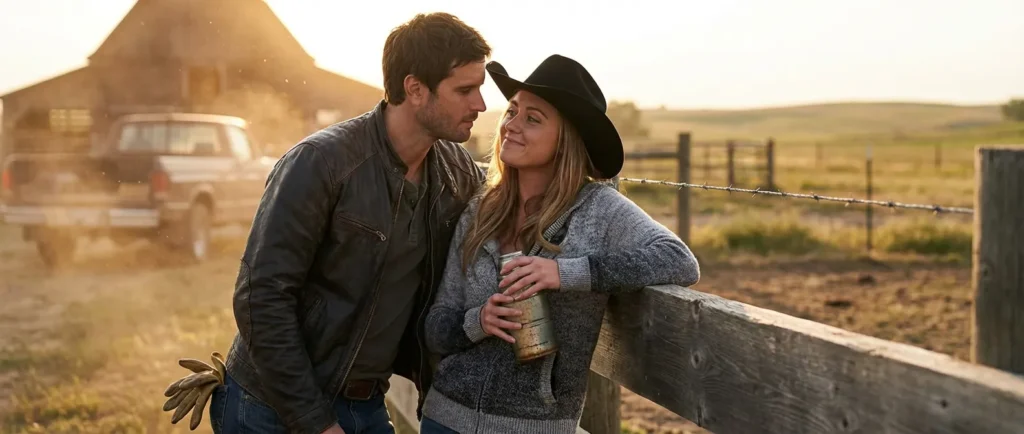
If you’ve spent any real time at Heartland, you know the greatest story the show ever told wasn’t about a miracle horse or a “impossible” healing. It was about the slow, heavy drag of two people building a life from scratch on a ranch floor. Amy and Ty didn’t just “fall” in love. They worked their way into it. That connection didn’t smell like roses and movie sets; it smelled like hay dust, cold leather, and exhaustion.
Their start wasn’t some polished Hollywood scene. It was friction. It was awkward silences and the sheer necessity of working shoulder-to-shoulder until the tension finally smoothed out into trust. We’re used to TV shows demanding a quick payoff, aren’t we? But Heartland let this one sit in the cold Alberta air until it cured. Their durability wasn’t about “feelings” in the abstract—it was rooted in a language of service. It was Ty on the high wires late at night, hands sliced open, securing the boundary so Amy could finally get some sleep. That’s the specific dialect they spoke. It was a scribbled note stuck to a thermos—coffee’s hot—a tiny insurance policy against the first bitter hours of a morning shift. This was survival, sustained by the simple, repeated act of showing up.
Fans remember the wedding, sure. But the scenes that actually carry the weight are the ones that were hard-won. Think back to the moments when the ranch felt like it was sinking, when Amy was on the verge of losing the very history she stood on. When she finally broke, Ty didn’t offer some Hallmark comfort or a pretty lie. He just took her hands and anchored her. We’ll rebuild it. Together. No music cue. No dramatic lighting. Just the truth between two people who chose to stay. They became the adults who had to navigate career pivots and the heavy, ugly parts of their own histories.
They actually made room for separate dreams, too. When Amy needed to chase something outside the ranch gates, Ty wasn’t a hurdle she had to jump; he was the engine. And when Ty came home carrying the weight of old physical and emotional hurts, Amy didn’t look past them. She lived with them. They became part of the shape of the man she held.
They were stubborn. They snapped at each other. They failed the “easy conversation” test more often than they passed it. They weren’t glossy, and they certainly weren’t perfect. But the choice to keep returning to one another? That was the durable thing. It wasn’t luck. It was muscle memory and the grinding awareness that the person standing next to you was the only one who truly understood the rough pitch of your life.
When I look back, I don’t think of the sweeping shots across the plains. I think of the quiet stuff. Ty’s worn-out boots left at an angle by the back door. Amy pulling a stray piece of straw from his collar. The faint, lingering smell of saddle soap on the sheets. That’s what’s left. And honestly? That’s more than enough.