

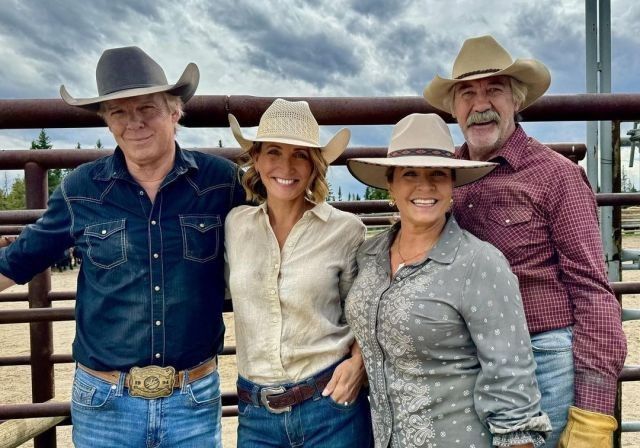
Long before economists started writing think-pieces about the rise of “multigenerational households,” Heartland was already serving up meatloaf, life lessons, and arguments at Jack Bartlett’s dinner table.
While the rest of the world is just now catching on to the idea of Grandma, parents, and kids living under one roof, Heartland didn’t just tell us it was possible—it showed us how it’s actually done. It built a home that feels so authentic, half of us wish we could move into the loft.
The “New Normal” is Just Life at the Ranch
It’s funny to see the headlines catching up to the show. Stats Canada recently reported that over 2.2 million people are now living in households spanning at least three generations. In the West, we spent decades drifting apart, valuing independence over everything else. But with housing costs skyrocketing and priorities shifting, families are coming back together.
For Heartland fans, though, this isn’t a statistic. It’s the heart of the show. We’ve watched them navigate the tricky waters of privacy, boundaries, and shared chores for years.
How Heartland Writers Make It All Feel So Real
I’ve always wondered how the show keeps the family dynamic from feeling like a cheesy sitcom. The writers—Heather Conkie, Mark Haroun, and Ken Craw—admit that the secret sauce is usually just their own experiences.
“We steal from real life,” Ken Craw admitted. “Family drama is everywhere—you just have to pay attention.”
He noted that writing for Heartland is basically just mining their own family memories. Those awkward silences at dinner? The quiet tensions and silly arguments? They don’t need to research that; they just remember their own holidays.
Heather Conkie points out that the longevity of the show does the heavy lifting for them. “Amy was only 15 when we started,” she said. “We’ve watched her grow up. The audience has grown with her, which makes it all feel real.”
Juggling Four Generations on Screen
Writing believable interactions between grandparents, parents, and kids isn’t easy, but the writers make it look effortless.
“Everyone sees things differently,” Conkie explained. “The drama comes from having multiple viewpoints on the same issue.”
We saw this peak in Season 13, which tackled the reality of a house that’s suddenly too small. You had Amy and Ty fostering Luke, Tim trying to claim the loft (classic Tim behavior), and Georgie coming back home expecting the independence she had while she was away. It was chaotic, stressful, and hilarious—exactly what happens when you put that many personalities in one kitchen.
Mark Haroun noted that they never settle for easy solutions because families rarely have easy solutions. They just have to figure it out.
How Heartland Actually Changes Real Families
The most touching part of the Heartland phenomenon is how it’s influencing real life. Conkie shared that fans actually write in to tell them they’ve started recreating the show’s famous Sunday dinners.
There is something powerful about that. In a world where everyone is usually glued to their phones in separate rooms, Heartland reminds us of the value of connecting. Younger generations learn from the elders, grandparents feel a renewed sense of purpose, and everyone has a safety net.
So, maybe we should all take a page out of Jack Bartlett’s book. It might be crowded, and you might fight over the bathroom, but sharing a life with family makes the ride a whole lot richer.